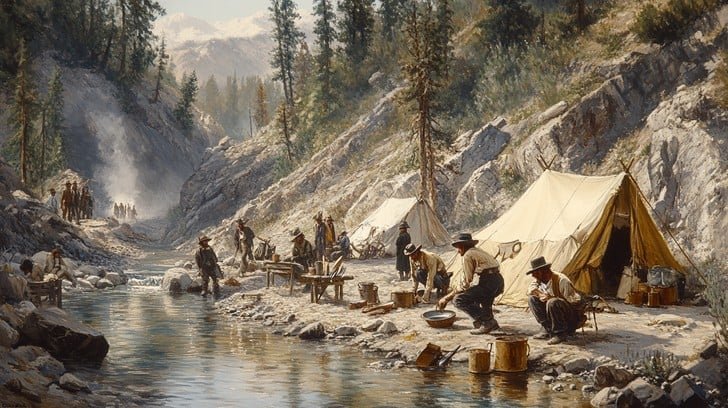
Africa has experienced multiple gold rushes over the centuries—both ancient and modern. While informal gold extraction dates back to early African kingdoms, the major industrial gold rushes began in the 19th and 20th centuries, especially in South Africa, which became the epicenter of global gold production.
1. The Witwatersrand Gold Rush – South Africa (1886)
The most significant and well-documented gold rush in Africa occurred in 1886 in the Witwatersrand Basin, located in present-day Gauteng Province, South Africa.
- Date: Officially started on July 15, 1886, when Australian prospector George Harrison discovered gold on Langlaagte Farm.
- Impact: Sparked a massive influx of prospectors, investors, and laborers from around the world.
- Result: Led to the founding of Johannesburg, now South Africa’s largest city and economic capital.
This discovery triggered one of the largest gold rushes in world history, transforming South Africa into the world’s leading gold producer by the early 20th century.
2. Earlier Gold Use and Trade in Africa
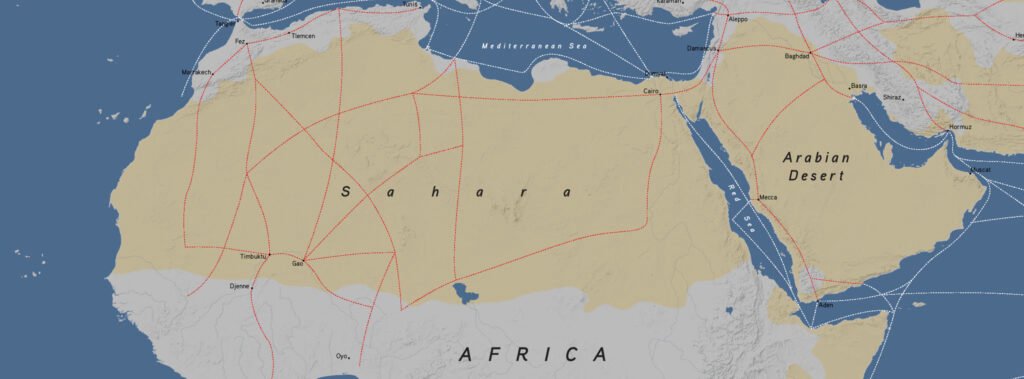
Long before European colonization, Africa was already rich in gold:
🟢 Ancient Gold Trade (300–1200 AD)
- The Ghana Empire (not modern Ghana) thrived on gold trade across the Sahara.
- Gold from West Africa reached Europe and the Middle East via trans-Saharan trade routes.
🟢 Mali Empire Gold Boom (14th Century)
- Under Mansa Musa, the Mali Empire became famous for its immense wealth, largely due to gold mined in the region of modern-day Mali and Guinea.
- The empire’s legendary pilgrimage to Mecca in 1324 showcased the region’s vast gold resources.
These were not “gold rushes” in the modern sense but marked periods of intensive gold extraction and trade that shaped African economies for centuries.
3. Later Gold Rushes in Other African Countries
Following South Africa’s gold boom, other parts of Africa saw smaller but impactful rushes:
🟢 Ghana (Late 1800s–Early 1900s)
- Known as the Gold Coast under British rule, large-scale mining began after colonial authorities mapped out the Ashanti Gold Belt.
- The Ashanti Goldfields Corporation was formed in 1897, marking the start of industrial gold mining in West Africa.
🟢 Tanzania (Early 1900s)
- German colonists identified gold in the Lake Victoria region in the late 1800s.
- Industrial mining expanded under British colonial rule after World War I.
🟢 Zimbabwe (formerly Southern Rhodesia)
- Gold discoveries in the 1890s led to settler-led mining operations.
- The Golden Reef near Bulawayo became a key site for early gold extraction.
Frequently Asked Questions (FAQs)
Q: When was the first gold rush in Africa?
A: While informal gold mining and trade date back to ancient African kingdoms, the first major industrial gold rush began in 1886 in South Africa.
Q: What caused the Witwatersrand Gold Rush?
A: The discovery of rich gold reefs in the Witwatersrand Basin led to a flood of prospectors, investors, and laborers seeking fortune.
Q: Did other African countries experience gold rushes?
A: Yes, later gold rushes occurred in Ghana, Tanzania, and Zimbabwe, though none matched the scale of South Africa’s.
Conclusion
The main gold rush in Africa took place in 1886 in South Africa, following the discovery of the Witwatersrand gold fields. This event reshaped the continent’s economy and led to the rise of Johannesburg. Earlier, West African empires like Ghana and Mali built their wealth on gold centuries earlier, laying the foundation for Africa’s long-standing connection to this precious metal.