
Gold has been known and used in Africa for thousands of years, with evidence of ancient mining dating back to pre-colonial civilizations. However, large-scale industrial discovery and exploitation began during the 19th and 20th centuries, particularly in South Africa, which became the center of global gold production.
1. Ancient Use of Gold in Africa

Long before European exploration, African kingdoms and societies were already using gold:
- The Ghana Empire (circa 300–1200 AD), located in present-day Mali and Mauritania, was known as the “Land of Gold” due to its vast reserves and trade networks.
- The Mali Empire (13th–16th centuries) became globally famous for its wealth, especially under Mansa Musa, who ruled in the 14th century and famously displayed immense gold wealth during his pilgrimage to Mecca.
Gold was used for:
- Currency
- Jewelry
- Religious and royal regalia
These empires sourced gold from alluvial deposits and small-scale mining operations across West Africa.
2. Industrial Discovery in South Africa – The Witwatersrand Gold Rush (1886)
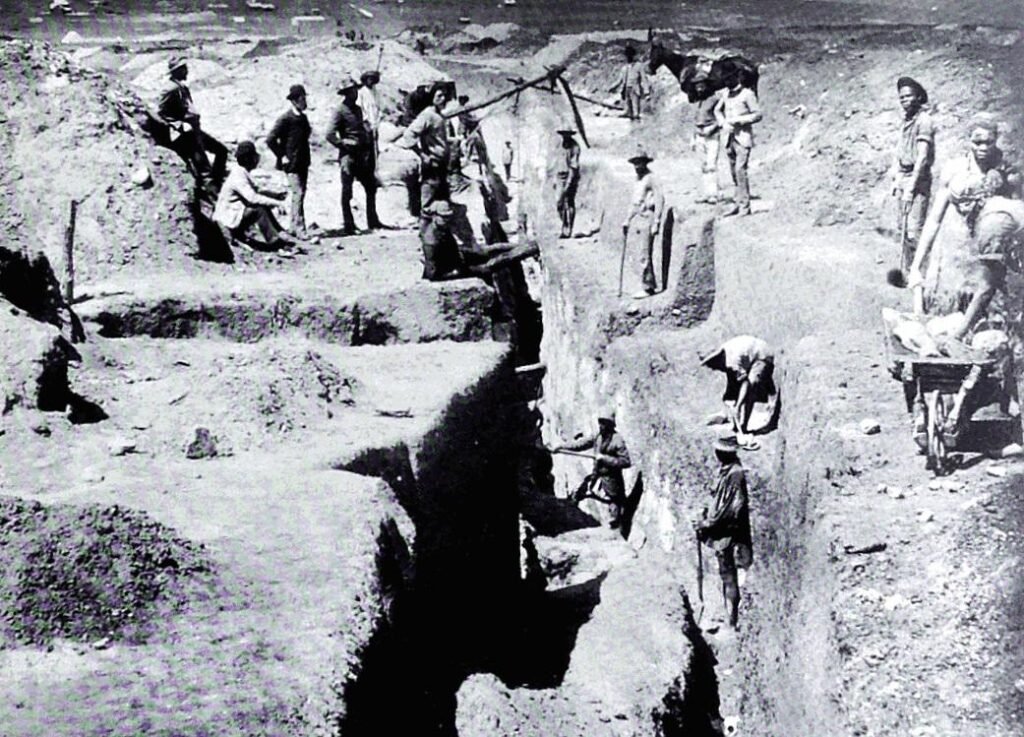
The most significant modern discovery of gold in Africa occurred in 1886 when George Harrison, an Australian prospector, found gold on the Witwatersrand Ridge in what is now Gauteng province, South Africa.
This led to the Witwatersrand Gold Rush, which transformed the region:
- Johannesburg was founded shortly after to support the growing mining industry.
- The Witwatersrand Basin was found to contain the largest known gold reserves in the world, leading South Africa to dominate global gold production for over a century.
By the early 20th century, South Africa was producing more than 40% of the world’s gold.
3. Major Gold Discoveries in Other African Countries
Following South Africa’s success, other regions in Africa saw major discoveries:
Ghana (formerly Gold Coast)
- Gold was known and traded by local kingdoms for centuries.
- Large-scale colonial-era mining began in the late 1800s.
- The Ashanti Goldfields Corporation was formed in 1897, marking the start of industrial gold mining.
Tanzania
- Gold mining dates back to pre-colonial times.
- Modern industrial extraction started in the early 20th century under German and later British colonial rule.
- The Lake Victoria Goldfield remains one of the most active regions today.
Mali and West Africa
- Gold was historically extracted from alluvial sources.
- Industrial mining expanded in the late 20th century.
- Major mines like Sadiola and Loulo opened in the 1990s and 2000s.
Frequently Asked Questions (FAQs)
Q: When was gold first discovered in Africa?
A: Gold has been mined and used in Africa for thousands of years, especially in ancient kingdoms like Ghana and Mali.
Q: When was gold discovered in South Africa?
A: Gold was officially discovered in South Africa in 1886 in the Witwatersrand Basin, triggering the gold rush that built Johannesburg.
Q: Which African country produces the most gold today?
A: Ghana is currently the largest gold-producing country in Africa, surpassing South Africa in recent years.
Conclusion
Gold in Africa has been known and valued for millennia, but the industrial discovery that shaped modern economies began in South Africa in 1886. This marked the start of Africa’s rise as a dominant force in global gold production, followed by major developments in countries like Ghana, Tanzania, and Mali.