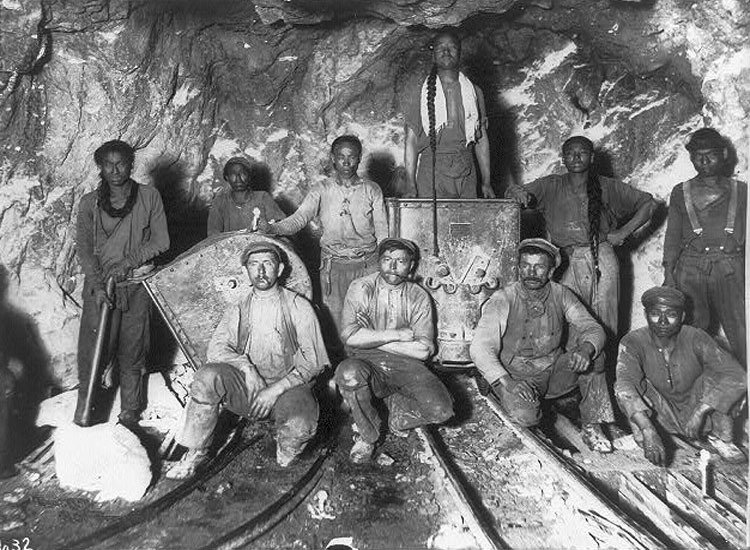
Gold was officially discovered in South Africa in 1886, a moment that transformed the country into the largest gold producer in the world for much of the 20th century. This discovery triggered the Witwatersrand Gold Rush, leading to the rapid development of what is now Johannesburg, South Africa’s economic hub.
The Discovery That Changed History

The pivotal moment came when an Australian prospector named George Harrison found gold on a farm called Langlaagte, located on the Witwatersrand Ridge, on 15 July 1886.
This find led to one of the most significant mineral discoveries in history and set off a massive influx of prospectors, investors, and laborers from across the globe.
The Rise of the Witwatersrand Basin
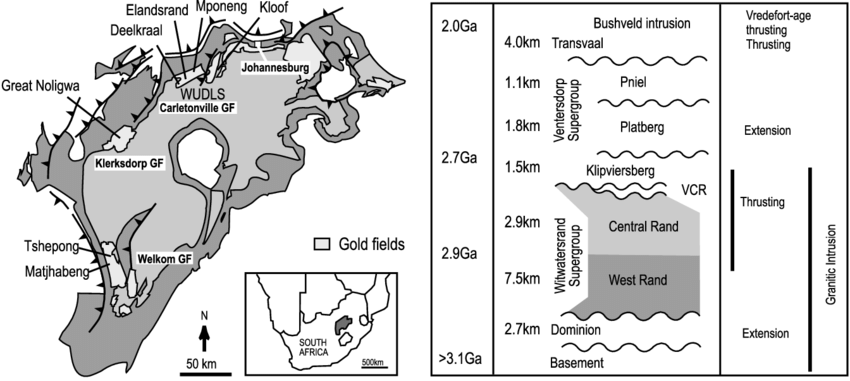
The Witwatersrand Basin, the discovery region, contains the richest known gold deposits ever found on Earth. Unlike other gold fields, the gold here was embedded in ancient sedimentary rock—requiring deep-level mining techniques that were advanced for the time.
Key facts:
- The basin has produced over 40% of all the gold ever mined globally.
- Mining operations expanded rapidly after 1886, attracting investment from British and international companies.
- The city of Johannesburg grew around the mines and became the heart of South Africa’s gold industry.
Pre-Colonial and Colonial Gold Use

Although large-scale industrial mining began in 1886, gold usage in the region happened long before European settlers arrived:
- Early Bantu-speaking communities mined alluvial gold in rivers centuries ago.
- Gold from the region was traded along ancient routes as far as the Middle East and India.
- The Mapungubwe Kingdom (circa 1000–1300 AD), located in present-day Limpopo Province, was known for its gold artifacts and trade networks.
However, these earlier gold workings were small-scale and not widely documented by global markets.
Impact of the Gold Discovery
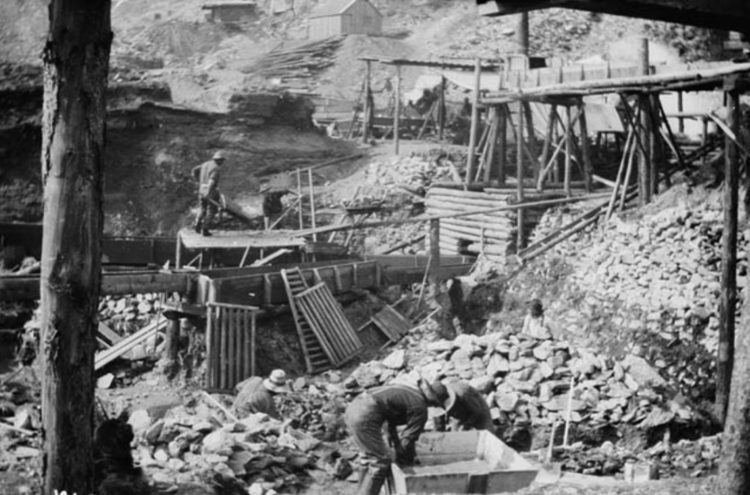
The discovery of gold in South Africa had profound effects:
Economic Growth
- Led to the establishment of major banks, railways, and financial institutions.
- Transformed South Africa into a global mining powerhouse.
Political Changes
- Triggered the Anglo-Boer Wars due to tensions between British imperial interests and Dutch settlers (Boers).
- Resulted in increased colonial control and eventual British dominance.
Urban Development
- Johannesburg, founded in 1886 as a mining camp, quickly grew into a major city.
- Today, it remains the economic center of South Africa.
Frequently Asked Questions (FAQs)
Q: Who discovered gold in South Africa?
A: George Harrison, an Australian prospector, found gold on the Witwatersrand Ridge on 15 July 1886.
Q: Where was gold first discovered in South Africa?
A: Near Langlaagte Farm, which is now part of Johannesburg in Gauteng Province.
Q: Why was the Witwatersrand gold discovery so important?
A: It contained the world’s largest gold reserves, fueling South Africa’s rise as the top global producer for over a century.
Conclusion
Gold became officially discovered in South Africa on 15 July 1886 by George Harrison on the Witwatersrand Ridge. This event sparked the gold rush that built Johannesburg and established South Africa as a dominant force in global gold production for decades to come.