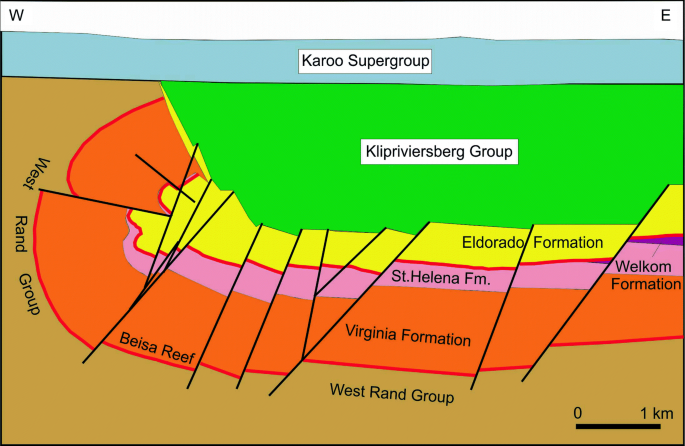
Gold in South Africa occurs in several distinct geological forms, shaped by ancient geological processes that created some of the richest gold reserves on Earth. Understanding how gold is found helps explain why South Africa has historically been the largest gold producer in the world.
1. Reef Gold – The Witwatersrand Basin
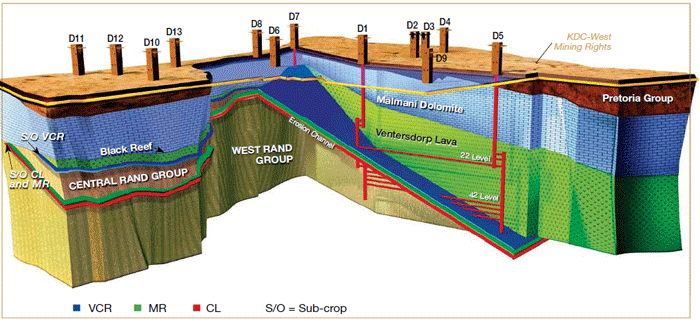
The most significant occurrence of gold in South Africa is reef gold, found in the Witwatersrand Basin, which stretches across Gauteng, North West, and Free State provinces.
- Gold is trapped in ancient sedimentary rock layers, particularly in conglomerate reefs.
- These reefs are thin but extremely rich, often containing high concentrations of microscopic gold particles.
- Mining requires deep-level underground operations, some reaching depths of over 4 kilometers.
This form of gold accounts for over 40% of all the gold ever mined globally.
2. Alluvial Gold – River Deposits
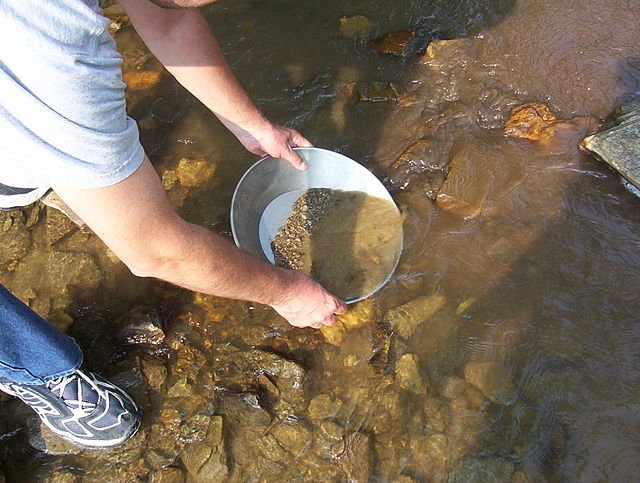
This gold is found in riverbeds and stream sediments, especially near historic mining areas or eroded gold fields.
- This gold became naturally washed away from primary deposits by water over millions of years.
- Often found as small flakes or nuggets.
- Common locations include areas near Johannesburg, Barberton, and old mine tailings.
Alluvial gold can be extracted using simple techniques like gold panning, sluicing, and dredging, making it accessible to small-scale miners and hobbyists.
3. Secondary Gold – Mine Tailings and Dumps
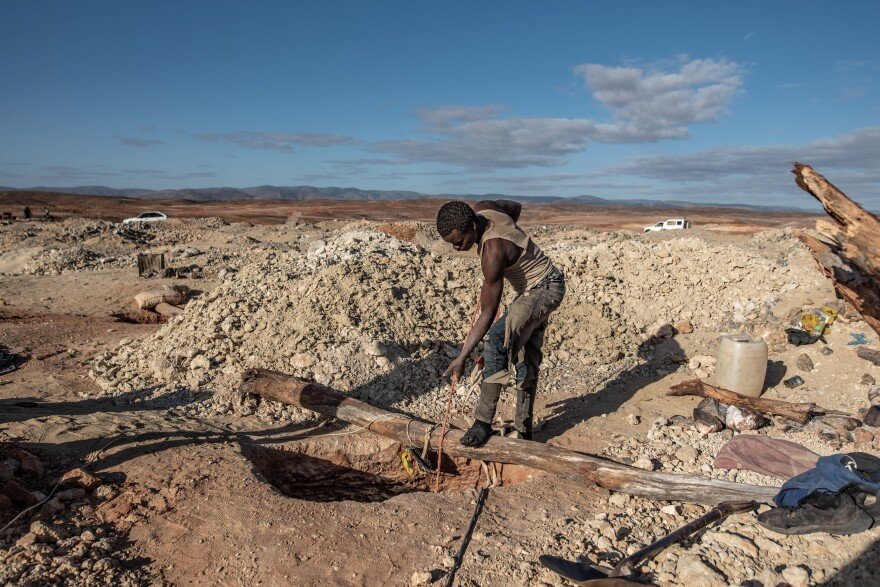
A significant amount of gold remains in old mining waste, such as:
- Tailings dams
- Discarded ore dumps
- Abandoned shafts
Modern reclamation projects use advanced technology to recover gold from these sources, sometimes at lower costs than deep-level mining.
Companies are increasingly investing in tailings retreatment to extract residual gold left behind by older mining methods.
4. Placer Gold – Surface Deposits

Placer gold refers to loose gold particles that weather from bedrock and transported by water or wind.
- Found in gravel deposits, especially in erosion-prone areas.
- Often associated with alluvial gold, though placer deposits may also occur inland.
- Possible to recover using simple tools and gravity separation methods.
These deposits were among the first gold sources exploited during the early days of South African gold mining.
5. By-Product Gold – Associated with Other Minerals

In some cases, gold becomes recovered as a by-product during the extraction of other metals like:
- Uranium
- Copper
- Nickel
- Platinum Group Metals (PGMs)
This type of gold typically occurs in polymetallic deposits, where multiple valuable minerals occur together.
Frequently Asked Questions (FAQs)
Q: What is reef gold?
A: Reef gold refers to gold trapped in conglomerate rock layers, especially in the Witwatersrand Basin—South Africa’s richest gold source.
Q: Is all gold in South Africa mined underground?
A: Most reef gold comes from deep-level underground mines, but alluvial and placer gold can be found near rivers and old mining sites.
Q: Can I find gold in rivers in South Africa?
A: Yes, small amounts of alluvial gold can be found in streams and riverbeds, especially in gold-rich regions like Barberton and Mpumalanga.
Conclusion
Gold in South Africa occurs in various ways, from deep-level reef gold in the Witwatersrand Basin to alluvial and placer deposits found in rivers and erosion zones. Whether through large-scale industrial mining or small-scale prospecting, South Africa continues to offer diverse opportunities for gold recovery.