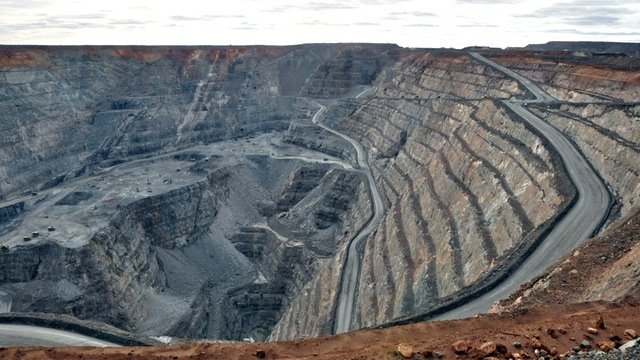
Australia has long been one of the world’s top gold producers , with a rich history dating back to the mid-1800s gold rushes that helped shape the nation. From the discovery at Ophir in 1851 to the rise of massive modern mining operations, gold has played a vital role in Australia’s economy and development.
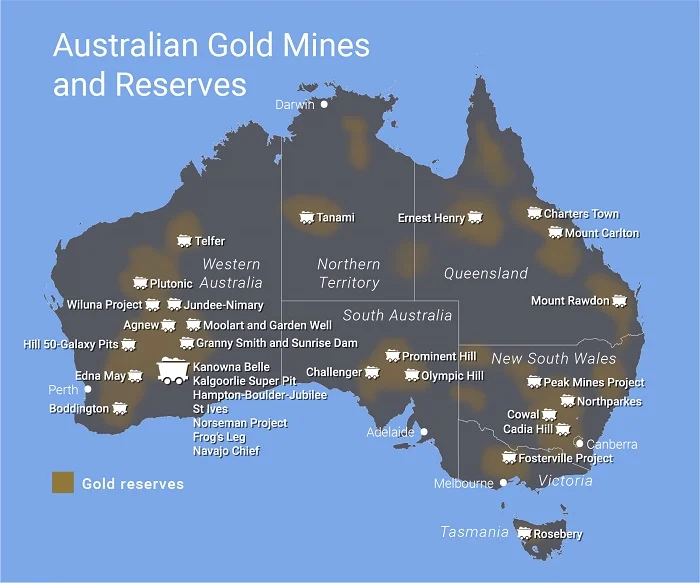
Today, the country ranks among the top five gold-producing nations globally , with active gold fields stretching from the outback of Western Australia to the lush hills of Queensland .
Australia offers something for every gold enthusiast from recreational prospecting, historic gold towns to exploring industrial mining operations.
🗺️ Key Gold Mining Regions in Australia
| Region | Highlights |
|---|---|
| Western Australia (Kalgoorlie, Boddington) | Australia’s largest gold producer; home to the Super Pit |
| New South Wales (Bathurst, Orange) | Site of the first major gold rush in 1851 |
| Queensland (Charters Towers, Mount Morgans) | Rich in both historic and current gold production |
| Victoria (Ballarat, Bendigo) | Famous for 19th-century gold rushes and underground mines |
| South Australia (Coober Pedy, Wilcannia) | Smaller but active gold-bearing regions |
🧭 Recreational Gold Prospecting Opportunities
For those looking to try their luck:
- Lawn Hill Gorge (Queensland)
- Weddin Mountains (NSW)
- Stawell Gold Mine Tours (Victoria)
- Menzies & Norseman (WA) – Public fossicking areas
- Private Pay-to-Pan Sites – Some landowners offer guided experiences
Always check local regulations — many areas require permits for fossicking or metal detecting
🔧 Tools You’ll Need for Gold Prospecting
| Tool | Use |
|---|---|
| Gold Pan | Separates gold from sand and gravel |
| Metal Detector | Locates buried gold nuggets |
| Sluice Box | Helps process larger volumes of dirt |
| Shovel & Pick | For digging through soil and rock |
| Snuffer Bottle | Picks up fine gold flakes |
🌍 Major Modern Gold Mines in Australia
Australia is home to some of the largest and most productive gold mines in the world, including:
- Super Pit (Kalgoorlie, WA) – One of Australia’s biggest open-pit mines
- Boddington Gold Mine (WA) – Operated by Newmont, produces over 600,000 ounces annually
- Tropicana Gold Mine (WA) – Joint venture between AngloGold Ashanti and Regis Resources
- St Ives Gold Mine (WA)
- Mount Morgans Gold Mine (WA)
- Fosterville Gold Mine (Victoria) – Known for high-grade ore
These mines use advanced technology and employ thousands, contributing billions to the national economy each year.
⚖️ Legal and Environmental Considerations
Gold mining in Australia is heavily regulated to protect the environment and ensure safety:
- State licensing required for recreational and commercial mining
- Indigenous land rights must be respected
- Environmental impact assessments are mandatory for large-scale projects
- Fossicking rules vary by state — always check local laws before starting
Many companies now focus on sustainable practices , including land rehabilitation and water conservation.
❓ Frequently Asked Questions (FAQ)
Q1: Where is the most gold found in Australia?
Most gold is mined in Western Australia , particularly around Kalgoorlie and the Super Pit. Other significant regions include Victoria, Queensland, and NSW.
Q2: Can I go gold prospecting in Australia?
Yes! Many areas allow recreational gold prospecting , especially in WA and QLD. Always obtain the necessary permits and respect private property and protected lands.
Q3: Do I need a license to pan for gold in Australia?
Most states have a fossicking licenses requirement for recreational prospecting obtained online or from local government offices.
Q4: Is gold mining still profitable in Australia?
Yes — Australia remains one of the top gold-producing countries in the world. With rising gold prices and new discoveries, mining continues to be a major economic driver.
Q5: What is the best time of year to go gold prospecting in Australia?
The best time varies by region, but generally, dry seasons (May–September) are best for accessing remote sites and creek beds.