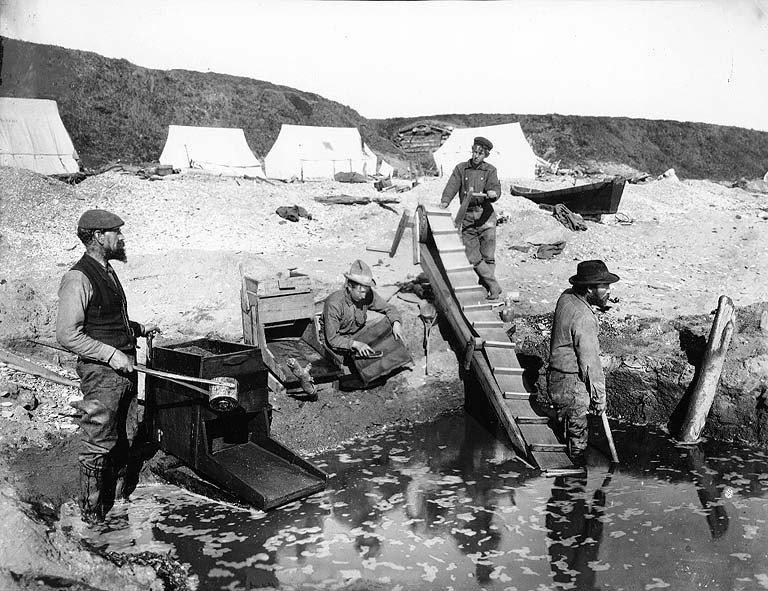
Alaska’s gold rush era began in the late 1800s and played a crucial role in shaping the state’s development.
Key historical highlights include:
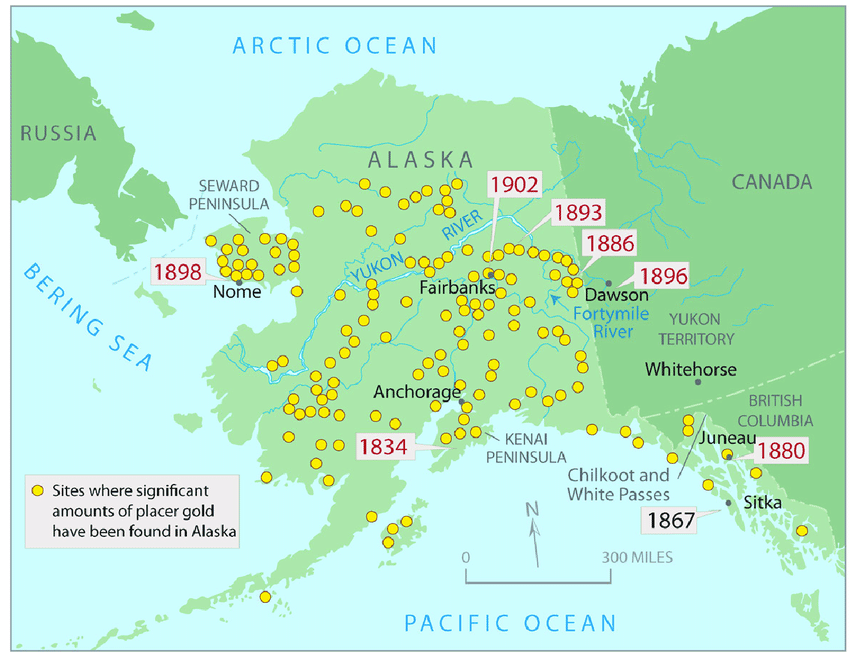
- 1880 – Juneau Gold Belt Discovery : The first major gold strike in Alaska.
- 1896 – Klondike Gold Rush : Though centered in Canada, it drew thousands through Alaska ports like Skagway and Dyea.
- Nome Gold Rush (1898) : Rich beach deposits brought thousands of prospectors to western Alaska.
- Fairbanks District (1902) : Discovery of gold led to the founding of Fairbanks and became one of Alaska’s longest-producing gold regions.
- Modern Era : Alaska still produces over 700,000 ounces of gold annually , making it one of the top gold-producing states in the U.S.
2. Best Places to Mine for Gold in Alaska Today
While large-scale commercial mining continues, many areas in Alaska are open for recreational gold panning and small-scale prospecting.
Nome Beach
- Famous for beach placers where gold can be found right on the sand.
- Accessible by air or ferry in summer; winter offers frozen beach mining.
Cripple Creek & Fairbanks Region
- Home to historic gold mines and active placer claims.
- Good for sluicing and metal detecting.
Fortymile River
- One of the oldest gold districts in Alaska.
- Popular among backpackers and float miners.
Chisana District (Wrangell Mountains)
- Known for its rugged terrain and rich gold deposits.
- Site of the 1913 Chisana Gold Rush.
Chicken, Alaska
- A remote but active gold town in the Yukon Flats.
- Visitors can pan for gold under supervision at local claims.
3. How to Pan for Gold in Alaska
Gold panning is the easiest and most accessible way to start prospecting. Here’s how to do it step-by-step:
Step-by-Step Gold Panning Instructions:
- Find a suitable location – Look for gravel bars in streams or rivers.
- Fill your pan with gravel and water
- Shake and swirl to separate lighter materials
- Tilt the pan slightly and wash away lighter sand and silt
- Repeat until only heavy black sands and gold remain
- Use a snuffer bottle to collect tiny gold flakes or nuggets
💡 Pro Tip: Wear gloves—Alaskan waters are cold even in summer!
4. Essential Tools for Gold Prospecting in Alaska
Here’s a list of basic tools you’ll need to get started:
- Gold pan – Plastic pans are lightweight and easy to use.
- Classifier screens – For separating larger rocks from finer material.
- Snuffer bottle – To suck up small gold flakes.
- Metal detector – Useful for finding nuggets above ground.
- Magnet – Helps remove black sands (which are mostly iron).
- Shovel and bucket – For digging and carrying material.
- Dry washer – Essential for dry or arctic conditions where water is scarce.
5. Legal Rules and Regulations
Before you begin gold mining in Alaska, it’s important to understand the laws and guidelines:
- Public Lands : Much of Alaska is public land managed by the BLM or U.S. Forest Service , and casual prospecting is allowed.
- Private Property : Always obtain permission before entering private land.
- Mining Claims : Some areas may be under active mining claims—check with local BLM offices.
- Environmental Protection : Avoid damaging streambeds or disturbing wildlife habitats.
🔍 Tip : Visit the Alaska Division of Mining, Land and Water or contact local ranger stations for updated rules.
6. Join a Gold Prospecting Club
Connecting with others who share your passion can enhance your experience. Consider joining:
- Alaska Miners Association
- Fairbanks Gold Prospectors Club
- Local metal detecting and lapidary clubs
These groups often organize trips, share tips, and offer mentorship to newcomers.
❓ Frequently Asked Questions (FAQs)
Q1: Can I legally mine for gold in Alaska?
A: Yes, but only on public lands open to mineral entry and with proper permissions on private land.
Q2: What kind of gold can I find in Alaska?
A: Mostly placer gold (small flakes and nuggets) found in streams, beaches, and riverbeds.
Q3: Do I need a permit to pan for gold?
A: No permit is needed for simple hand tools like pans and sluices. Larger equipment may require authorization.
Q4: Is gold still being mined commercially in Alaska?
A: Yes, especially in the Fort Knox Mine near Fairbanks and several smaller placer operations.
Q5: When is the best time to go gold prospecting in Alaska?
A: Late spring through early fall when snow has melted and streams are accessible. Winter allows for frozen beach mining in areas like Nome.