
Gold is a universally valued asset, but its price can vary significantly from one country to another. For investors, traders, or expatriates looking to buy or sell gold across borders, understanding the gold price in South Africa vs India is essential.
In this guide, we’ll compare:
- Current gold prices in both countries (in local currencies)
- Factors influencing these prices
- Whether it’s more cost-effective to buy gold in South Africa or India
Current Gold Prices (Approximate as of Recent Data)
| Unit | South Africa (ZAR) | India (INR) |
|---|---|---|
| 1 gram of 24K gold | ~R4,200 | ~₹5,800 |
| 10 grams of 24K gold | ~R42,000 | ~₹58,000 |
| 1 troy ounce (31.1g) | ~R130,000 | ~₹181,000 |
These values fluctuate daily due to changes in global gold rates , currency exchange rates , and local taxes .
Why Are Gold Prices Different?
While the international spot price of gold is largely the same globally, several factors cause differences in local pricing :
1. Currency Exchange Rates
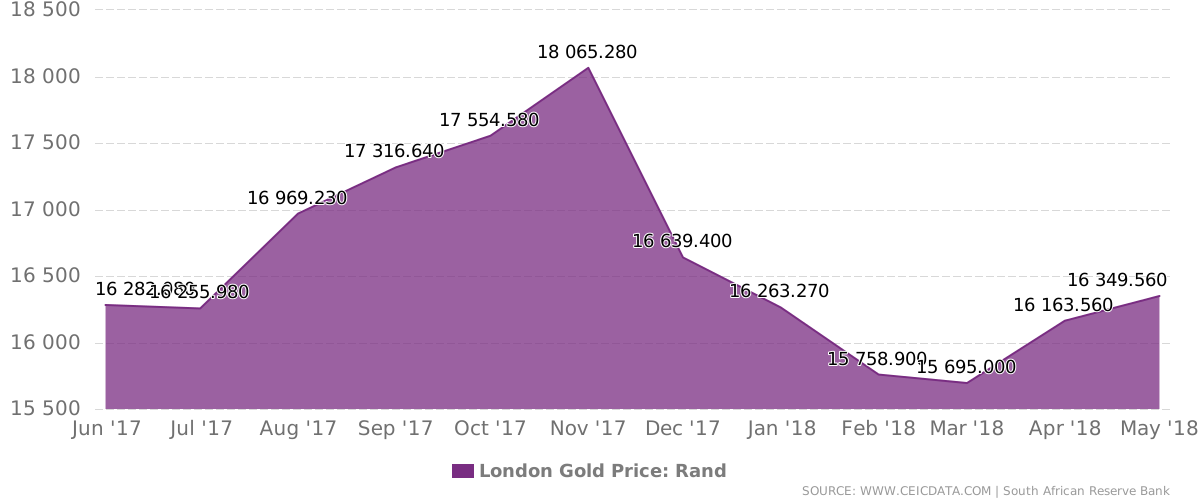
Gold is priced globally in US Dollars (USD) . The ZAR/USD and INR/USD exchange rates play a major role in determining how much gold costs in each country.
- A weaker South African Rand makes gold more expensive in ZAR.
- Similarly, a weaker Indian Rupee increases the INR cost of imported gold.
2. Import Duties and Taxes
India imposes import duties and GST (Goods and Services Tax) on gold imports, which significantly raises the final consumer price.
- India: Up to 15% import duty + 3% GST
- South Africa: No significant import tax on raw gold; gold bullion is VAT-free
This means that gold is generally cheaper in South Africa before taxes , making it potentially more attractive for bulk buyers.
3. Purity and Making Charges
In India, most gold purchases are for jewelry , which includes making charges (labor costs), increasing the total price.
In South Africa, investment-grade gold bars and coins (like Krugerrands) are often sold at or near bullion value , without added labor costs.
4. Market Demand and Cultural Preferences
India has one of the highest demands for gold globally , driven by weddings, festivals, and investment habits. This demand can push up retail prices.
In contrast, South Africa’s gold market is more oriented toward investment and mining exports , with relatively lower domestic demand for jewelry.
Is It Cheaper to Buy Gold in South Africa Than India?
Yes — in raw terms , gold is generally cheaper in South Africa than in India , especially when buying bullion or coins .
However, practical considerations like:
- Import regulations
- Transportation and insurance costs
- Legal requirements for carrying gold across borders
may affect whether you can actually benefit from the lower price.
For example:
- Bringing large quantities of gold into India may require customs declarations and duty payments , which could offset any savings.
- Buying physical gold in South Africa and selling it in India requires awareness of price arbitrage opportunities and market timing .
Frequently Asked Questions (FAQs)
Q: Is gold cheaper in South Africa than in India?
A: Yes, gold is generally cheaper in South Africa due to lower taxes and proximity to production zones.
Q: Can I buy gold in South Africa and bring it to India?
A: Yes, but you must declare it at customs and pay applicable import duties and GST in India.
Q: What affects the gold price in South Africa vs India?
A: Key factors include currency exchange rates, import taxes, purity standards, and domestic demand patterns.
Q: Which country produces more gold — South Africa or India?
A: South Africa is a major gold producer , while India is primarily a consumer and importer of gold.
Q: Should I invest in gold in South Africa or India?
A: If you’re buying physical gold for investment, South Africa offers better pricing. However, if you’re looking for liquidity and cultural demand, India remains a strong market.
Conclusion
The gold price in South Africa vs India shows that South Africa typically offers a more competitive rate for raw gold, especially for investors interested in bullion or coins.
However, logistics, taxes, and personal use should be considered before making cross-border investments.