Ghana is one of the top gold-producing countries in Africa, consistently ranking among the continent’s leaders. Known for its rich mineral deposits and favorable mining policies, Ghana has become a hub for both industrial and artisanal gold mining.
Here’s a detailed look at how gold mining operates in Ghana and its impact on the economy and society.
1. Ghana’s Role in African Gold Production
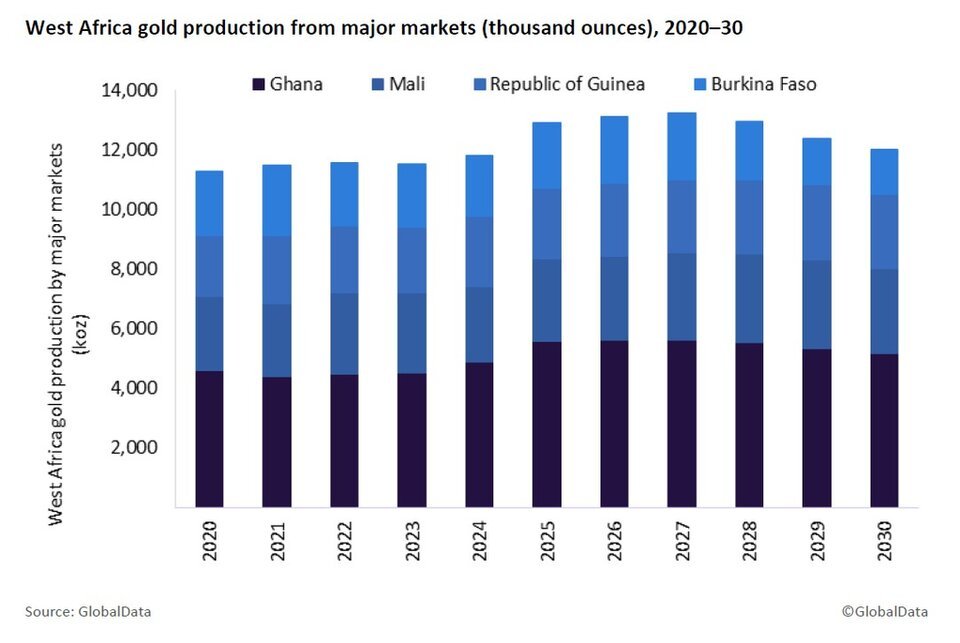
Ghana is currently the largest gold producer in Africa, surpassing South Africa in recent years. In 2024, the country produced approximately 150 tonnes of gold, contributing significantly to national revenue and foreign exchange earnings.
Gold accounts for over 30% of Ghana’s total mineral exports, making it a key pillar of the economy.
2. Major Gold Mines in Ghana

Several large-scale mines drive Ghana’s gold production:
- Ahafo Mine (Newmont) – One of the most productive gold mines in West Africa.
- Obuasi Mine (AngloGold Ashanti) – A historic underground mine recently revitalized for long-term production.
- Chirano Mine (Kinross Gold) – Operated as an open-pit and underground complex.
- Sadiola and Yatela (Randgold Resources / Barrick Gold) – Significant contributors in the northwest region.
- Akyem Mine (Newmont) – High-grade deposit with strong output levels.
These mines are operated by major international firms but often partner with local companies and governments.
3. Artisanal and Small-Scale Mining (ASM)

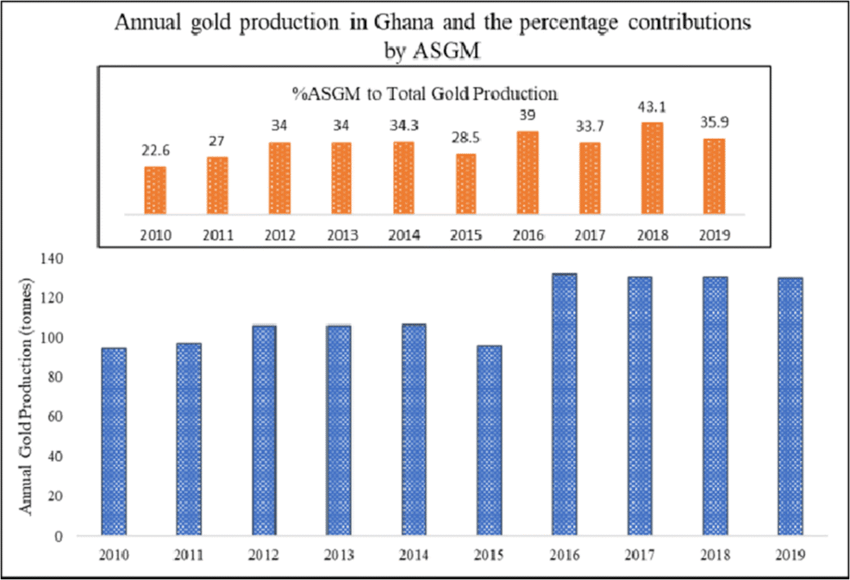
Artisanal and small-scale mining (ASM) plays a crucial role in Ghana’s gold sector:
- Accounts for up to 30% of national gold output
- Provides livelihoods for over 1 million people
- Often informal and labor-intensive
However, ASM faces challenges such as:
- Environmental degradation (e.g., deforestation, water pollution)
- Use of harmful chemicals like mercury
- Health risks for miners
- Illegal mining operations known locally as “galamsey“
The government continues to regulate and formalize ASM to improve safety and sustainability.
4. Economic Impact of Gold Mining
Gold mining contributes significantly to Ghana’s economy through:
- Foreign direct investment (FDI) from global mining firms
- Employment generation, directly and indirectly
- Government revenue via taxes, royalties, and export duties
- Infrastructure development in mining regions
Gold also helps stabilize the national currency and supports broader economic planning.
5. Challenges in Ghana’s Gold Mining Sector
Despite its benefits, the industry faces several challenges:
| Challenge | Description |
|---|---|
| Illegal mining (Galamsey) | Unregulated mining harms the environment and reduces tax revenue |
| Environmental damage | Mercury use and land degradation remain serious concerns |
| Community conflicts | Disputes over land rights and resource distribution |
| Regulatory enforcement | Gaps in oversight allow illegal operations to persist |
| Price volatility | Global market swings affect profitability and investment |
Efforts to address these issues include stricter enforcement, cleaner technologies, and community engagement programs.
❓ Frequently Asked Questions (FAQ)
Q: Why is Ghana a major gold producer?
A: Ghana has favorable geology, especially in the Birimian Greenstone Belt, along with supportive mining policies and infrastructure.
Q: Is artisanal gold mining legal in Ghana?
A: Yes, but many miners operate informally without proper licensing or environmental controls.
Q: What is galamsey in Ghana?
A: Galamsey refers to illegal, unregulated small-scale mining that causes environmental harm and economic losses.
✅ Final Thoughts
Gold mining remains a cornerstone of Ghana’s economy, driving investment, employment, and export earnings. While industrial mining dominates, artisanal operations continue to support millions of livelihoods.
With improved regulation, sustainable practices, and stronger enforcement, Ghana can maintain its leadership in African gold production while minimizing social and environmental costs.