Africa is renowned for its vast natural resources, and one of the most prized treasures beneath its soil is gold . The continent is home to some of the world’s largest gold deposits, with veins stretching across multiple countries. This blog explores the significance of these gold veins, their locations, and their impact on Africa’s economy and history.
Understanding Gold Veins
A gold vein refers to a deposit of gold-bearing rock or mineralized zones where gold is concentrated. These veins are formed over millions of years through geological processes such as volcanic activity, tectonic movements, and hydrothermal systems. In Africa, gold veins have been a source of wealth for centuries, shaping both ancient civilizations and modern economies.
Historical Significance
Gold has played a pivotal role in African history:
- Ancient kingdoms like Mali and Ghana became powerful empires due to their control over gold trade routes.
- The discovery of gold in South Africa’s Witwatersrand Basin in 1886 led to the rise of Johannesburg and transformed the region into a global mining hub.
Today, gold veins continue to drive economic growth, employment, and investment opportunities across the continent.
Key Gold Vein Locations in Africa
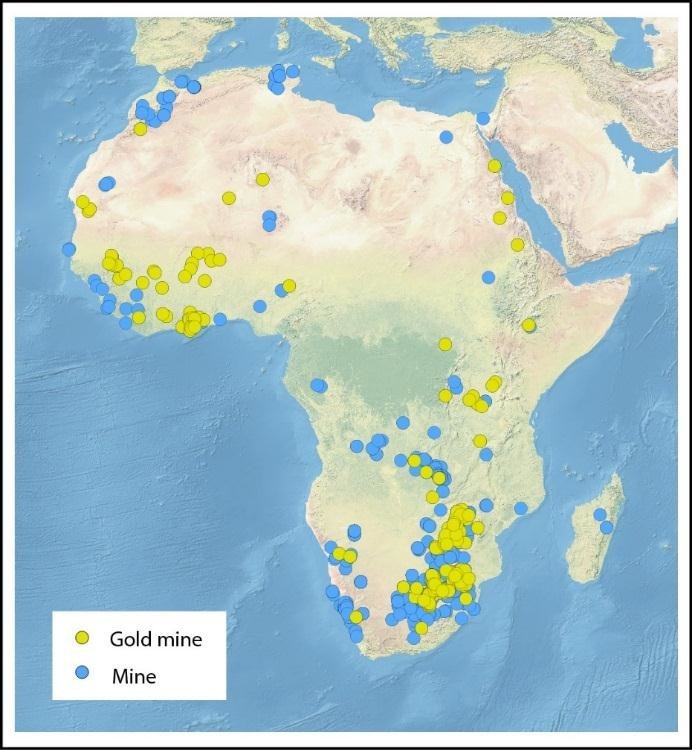
The map highlights several regions known for their rich gold veins:
1. West Africa
- Mali : The Birimian Greenstone Belt stretches across Mali, Burkina Faso, and Guinea, containing significant gold deposits.
- Ghana : The Ashanti Region is famous for its gold mines, including the Obuasi Mine and Tarkwa Mine .
- Nigeria : While less prominent than Ghana or Mali, Nigeria has potential gold reserves in states like Kogi and Osun .
2. Central Africa
- Democratic Republic of Congo (DRC) : The Katanga Province hosts large-scale gold deposits, often mined alongside cobalt and copper.
- Burkina Faso : The Houndé Massif region is emerging as a significant gold-producing area.
3. East Africa
- Tanzania : The Lake Victoria Goldfields and areas around Geita and Bulyanhulu are major gold-producing regions.
- Kenya : Smaller deposits exist near Kisumu and other parts of the country.
4. Southern Africa
- South Africa : The Witwatersrand Basin is legendary for its deep-level gold mines, including operations in Johannesburg , Carletonville , and Welkom .
- Botswana : Recent discoveries in the Kalagadi Basin show potential for future gold production.
5. North Africa
- Morocco : Some smaller gold deposits exist in the Anti-Atlas Mountains .
- Egypt : Ancient gold mines in the Eastern Desert were historically significant but are less active today.
Economic Impact of Gold Veins
Gold veins contribute significantly to Africa’s economy in several ways:
- Foreign Exchange Earnings : Gold exports generate billions of dollars annually, supporting national budgets.
- Employment Opportunities : Mining operations provide jobs for thousands of people, particularly in rural areas.
- Infrastructure Development : Investment in mining often leads to improved roads, power supply, and communication networks.
- Investor Attraction : Large multinational companies invest heavily in exploring and exploiting gold veins, bringing capital and technology.
However, challenges remain, including:
- Environmental Degradation : Mining activities can lead to deforestation, water pollution, and habitat destruction.
- Social Issues : Conflicts over land rights, labor disputes, and artisanal mining practices pose risks.
- Economic Dependence : Over-reliance on gold can make economies vulnerable to price fluctuations.
Frequently Asked Questions (FAQs)
Q: Which African country has the most gold veins?
A: South Africa is historically the leader, but countries like Ghana, Mali, and Tanzania also host significant gold veins.
Q: Are gold veins still being discovered in Africa?
A: Yes, exploration continues in underdeveloped areas, especially in Central and East Africa.
Q: How do gold veins affect local communities?
A: They provide jobs and infrastructure but can also lead to environmental damage and social conflicts if not managed responsibly.
Q: Can tourists visit gold mines in Africa?
A: Some mines offer tours, particularly in South Africa and Ghana, providing insights into mining operations.
Q: What is the future outlook for gold veins in Africa?
A: With rising demand and technological advancements, Africa’s gold veins remain a focus for exploration and sustainable development.
Conclusion
Gold veins in Africa represent not only a valuable resource but also a complex interplay of economic opportunity, cultural heritage, and environmental responsibility. Understanding these veins helps us appreciate the continent’s rich geological legacy and its ongoing journey toward sustainable development.
